
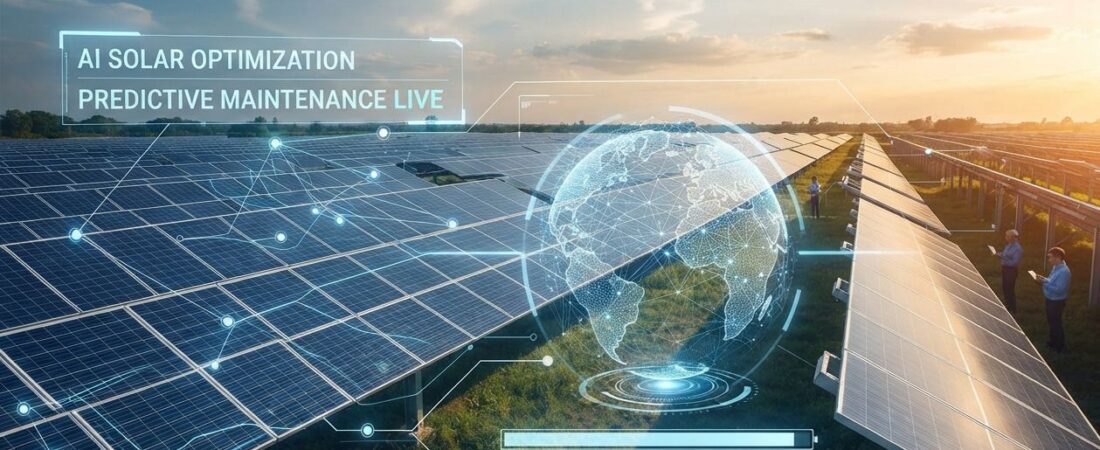
Solar energy is already a pillar of the global energy transition, but a new protagonist is taking its performance to unprecedented levels: Artificial Intelligence (AI). Far from being just a buzzword, the integration between Solar Automation and intelligent algorithms is transforming “passive” solar panels into dynamic, highly productive systems.
The Challenge of Variability
Traditionally, the efficiency of a solar panel depends almost exclusively on external conditions: the sun’s angle, cloud cover, dust accumulation, and temperature. Until recently, systems were set up in a static manner. AI is changing this scenario by allowing systems to “learn” from the environment in real time.
How AI Optimizes Performance
AI-driven automation operates on three main fronts to maximize energy harvest:
1. Smart Solar Tracking: In plants equipped with trackers, AI analyzes real-time meteorological data to adjust the tilt of the panels. It prevents issues like inter-row shading during low-sun hours, optimizing the angle to capture the maximum possible irradiance.
2. Predictive Maintenance: Through computer vision and IoT sensors, AI detects performance drops caused by micro-cracks, debris accumulation, or inverter failures. Instead of waiting for periodic manual inspections, the system alerts the technical team exactly where and what the problem is, drastically reducing downtime.
3. Storage and Demand Management: AI predicts consumption patterns and future generation with high precision. It autonomously decides when to store energy in batteries and when to feed it back into the grid or use it to power critical loads, maximizing the system’s Return on Investment (ROI).
The Impact on the Industry
The implementation of this technology benefits more than just large-scale power plants. Intelligent residential and commercial systems already use Machine Learning algorithms to balance the load between solar generation and grid usage, ensuring the user always pays the lowest possible rate.
We are shifting from an era of “install and forget” to an era of proactive and intelligent management. The synergy between robust hardware and advanced software is what will ensure solar energy becomes the most efficient and affordable source of energy on the planet.